
Welcome to my Homepage
I am a theoretical astrophysicist interested in the formation and evolution of structure in the Universe, in particular galaxies and clusters of galaxies. My main research focus are the effects of supermassive black holes on galaxy formation, and the co-evolution of both though cosmic time.
My work is largely based on numerical simulations. I am interested in improving modeling techniques and applying them to large scale simulations on supercomputers, as well as in connecting these simulations to both, analytical models and observations at all wavelengths.
photo credit: AIP/T. Bergemann
2023 – present
Junior Research Group Leader, Leibniz Institute for Astrophysics Potsdam (AIP)
Potsdam, Germany
2021 – 2023
Postdoctoral fellow, Canadian Institute for Theoretical Astrophysics
Toronto, ON, Canada
2018 – 2021
ITC postdoctoral fellow, Center for Astrophysics | Harvard & Smithsonian
Cambridge, MA, USA
2014-2018
Ph.D. Student, Heidelberg Institute for Theoretical Studies
Heidelberg, Germany
Projects
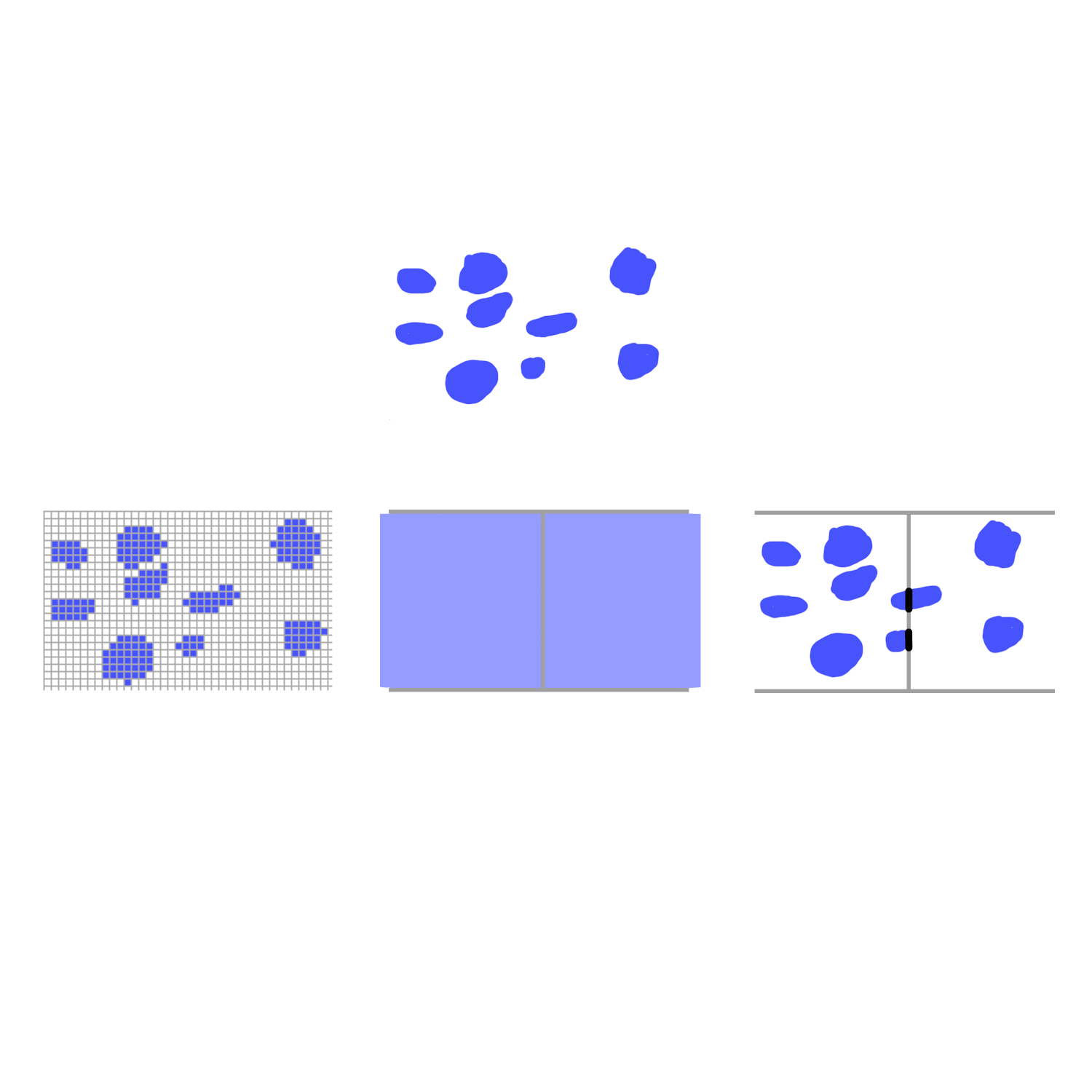
Multi-phase gases in astrophysics
Diffuse gas in and around galaxies can exist in a multi-phase state: cold gas clouds embedded in a hotter, volume filling medium. I am particularly interested in ways to model these states in computer simulations of galaxy formation
without spatially resolving the clouds.
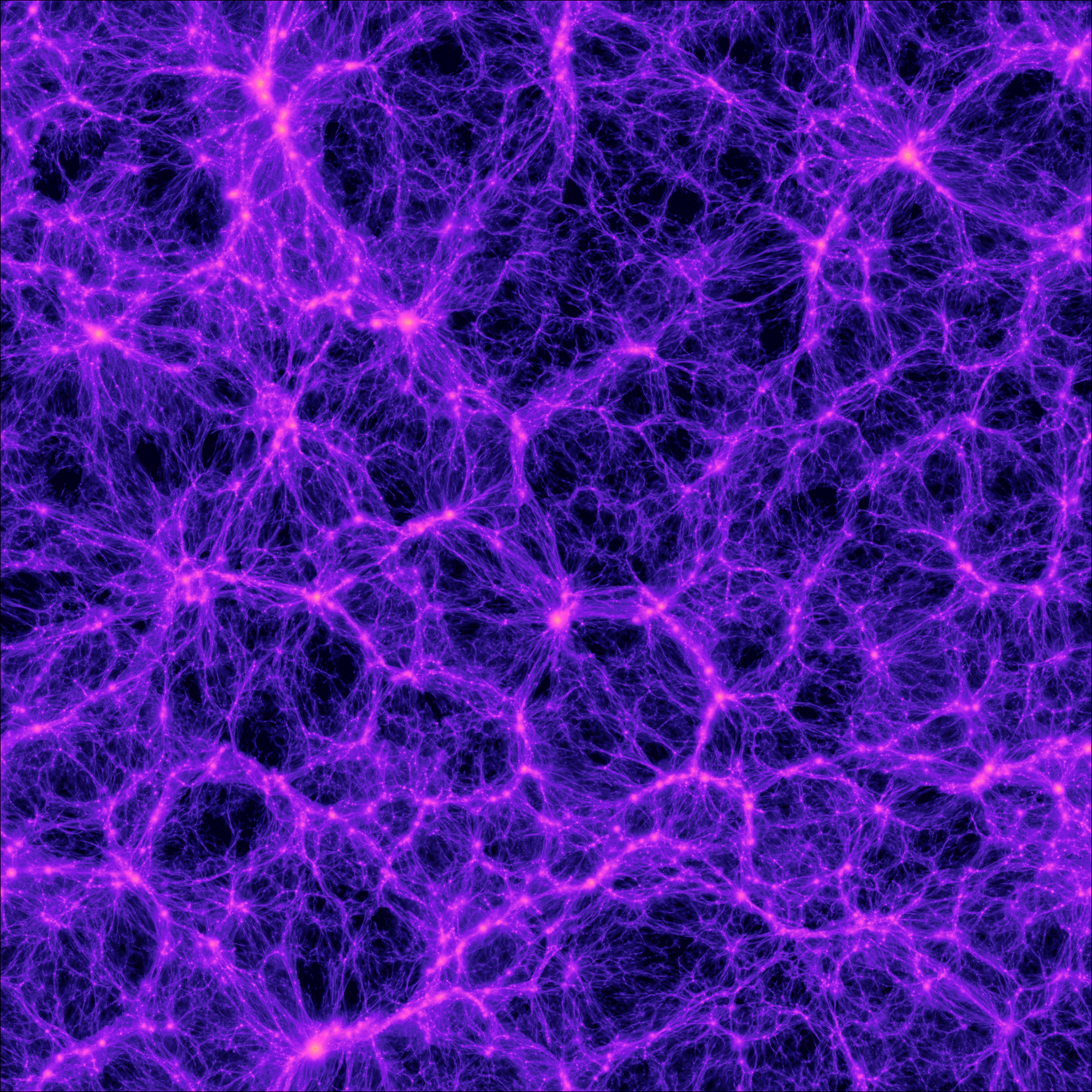
Cosmological galaxy formation
Starting out with initial state in the early universe, I am interested in the physical processes needed to reproduce observed present-day galaxies. We perform large-scale computer simulations to make these predictions.
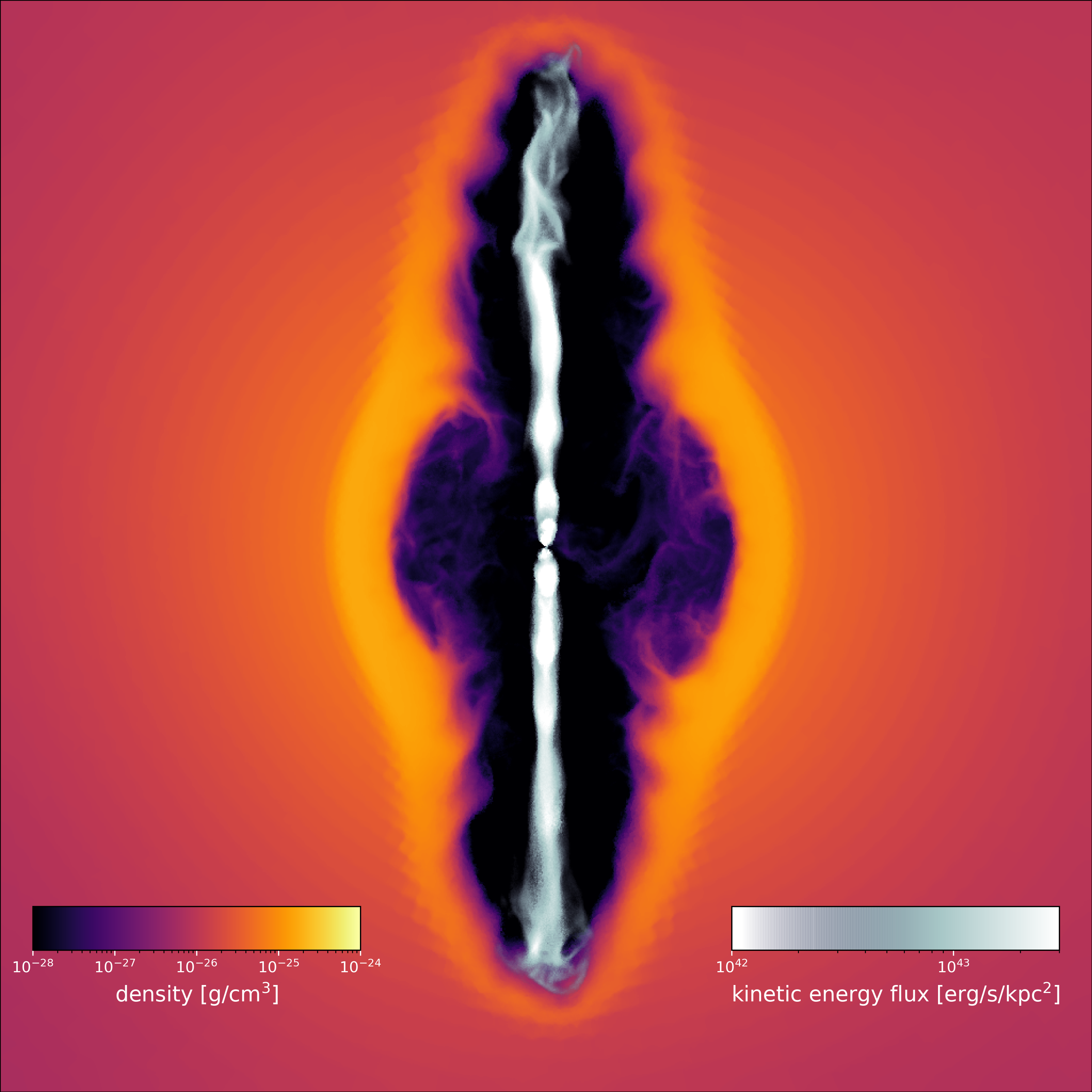
Black hole driven jets in galaxy clusters
How do collimated, energetic outflows driven by black holes in the center of galaxy clusters affect the intra-cluster gas and ultimately the rate of star formation in the central cluster galaxy
Learning the Universe
Over the past decade, advancements have enabled the simulation of galaxy formation starting from cosmological initial conditions. Simultaneously, cosmological surveys have achieved percent-level accuracy in model fitting. However, many traditional modelling approaches either overlook or greatly simplify the complex astrophysical processes that govern galaxy formation. This creates challenges for cosmology, particularly at ‘small-scale’ regimes where galaxy formation significantly influences cosmic structure. As part of the Learning the Universe collaboration, I am working with a team to address this challenge by jointly modeling cosmic structure and galaxy formation. Together, we are developing innovative methods to integrate essential galaxy formation processes into cosmological inference pipelines.
BlueJay –
Massive galaxies at cosmic noon
In the nearby universe, massive galaxies are typically found in a quiescent state, characterized by low rates of star formation and predominantly old stellar populations. The transition to this phase, known as quenching, occurred roughly 10 billion years ago—at redshift 2 to 3—during an era commonly referred to as cosmic noon. To better understand the quenching process, we conducted a series of JWST NIRSpec observations on a representative sample of galaxies from this epoch, with the goal of investigating their gaseous and stellar properties. By creating numerical models that align with these observations, we are able to gain valuable insights into the conditions of these galaxies 10 billion years ago, as well as explore plausible mechanisms behind quenching, such as the influence of highly energetic active galactic nuclei.
Leibniz Science Campus SCALES
A common challenge in computational science is addressing multi-scale phenomena: large-scale environments influence small-scale behaviors, which in turn affect the larger system through complex feedback mechanisms. For instance, in galaxy formation, gas accreting into galactic centers powers an active galactic nucleus, resulting in significant reduction of star formation throughout the host galaxy over hundreds of millions of years. Similar multi-scale dynamics are present in climate models, where local phenomena impact global behavior, as well as in numerous other scientific and engineering fields. I am involved with Leibniz-Campus SCALES, an initiative that unites scientists modeling these phenomena in astrophysics, climate science, earth system modeling, and mathematicians focused on the underlying methodologies. Our goal is to learn from advances across these traditionally separate disciplines and collaboratively enhance the reliability and accuracy of our models by leveraging our broad, collective expertise.